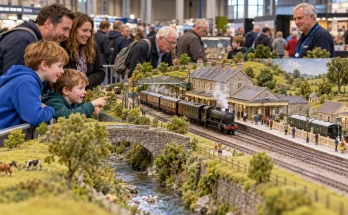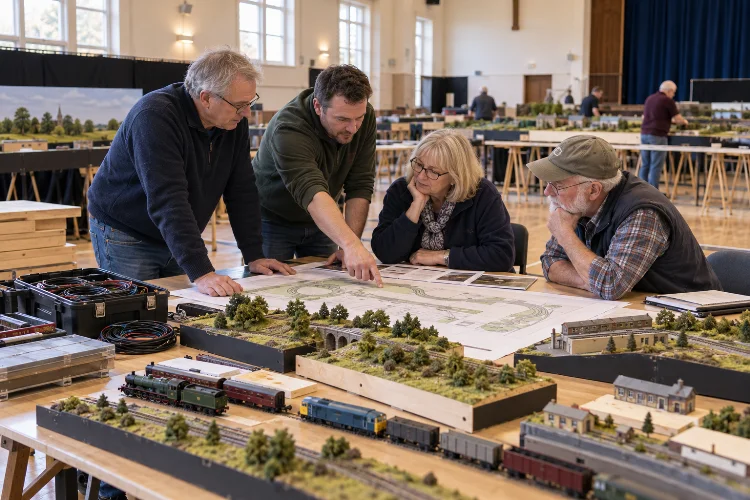
Imagine walking into a busy model railway exhibition in Suffolk. Beautifully detailed steam locomotives travel through miniature countryside stations, diesel engines navigate complicated junctions, and families gather around impressive layouts showcasing decades of British railway history.
Everything looks effortless from the visitor’s perspective.
But behind those perfectly arranged miniature railways lies something considerably more complicated: months of planning, technical preparation, volunteer coordination, and careful event management.
That’s where advanced model railway exhibition planning for Suffolk rail events becomes essential.
Organising a successful railway exhibition isn’t simply about inviting a few layout owners and renting a village hall. It involves creating an enjoyable experience for visitors while ensuring exhibitors have the space, equipment, and support needed to operate reliably.
Suffolk has an established railway modelling community, with clubs and enthusiasts regularly contributing to exhibitions across East Anglia.
From small community showcases to larger regional events, these gatherings celebrate craftsmanship, railway heritage, and shared technical knowledge.
Whether you’re organising your first exhibition or improving an established annual show, this guide explores practical strategies for planning a professional, engaging, and financially sustainable model railway event.
1. Understanding Suffolk’s Model Railway Exhibition Scene
Suffolk has a strong connection with railway history, making it an appealing location for model railway exhibitions.
Historic railway routes once linked agricultural communities, coastal towns, ports, and regional market centres. This heritage provides excellent inspiration for layouts representing the Great Eastern Railway, British Railways, and later railway operations.
Today, local modelling clubs help preserve that interest through regular meetings, exhibitions, and collaborative projects.
Learning From Established Suffolk Railway Clubs
The Sudbury Model Railway Club provides a useful example of how established exhibitions can bring enthusiasts together.
Its 44th annual exhibition was scheduled for 3 October 2026 at the Stevenson Centre in Great Cornard, featuring layouts, traders, refreshments, and visitor facilities.
The published exhibition programme included several scales, from OO and O gauge to N gauge and narrow-gauge modelling.
Another important local organisation is the Ipswich Railway Modellers Association, which supports railway modelling across different scales and historical periods.
Its activities include club meetings, open days, and exhibition participation around East Anglia.
These examples demonstrate why successful exhibitions need variety rather than relying entirely on one type of railway.
Identifying Your Exhibition’s Main Purpose
Before planning the event, establish what you want it to achieve.
Perhaps your goal is to raise money for a local railway club, attract new members, promote railway history, or showcase specialist modelling techniques.
A family-friendly event will require a different approach from an exhibition aimed primarily at experienced finescale modellers.
Defining your purpose early helps guide decisions about exhibitors, ticket prices, venue size, and promotional activities.
2. Selecting the Right Suffolk Venue for a Railway Exhibition
Choosing the venue is one of the most important decisions an exhibition organiser makes.
A beautiful railway layout becomes far less enjoyable when visitors struggle to move around crowded tables or exhibitors cannot access their equipment.
Suffolk offers village halls, community centres, school buildings, and other potential exhibition spaces.
However, not every building is suitable for displaying large, fragile model railway layouts.
Evaluating Exhibition Floor Space
Begin by examining the usable floor area rather than simply relying on a venue’s advertised capacity.
A hall measuring 25 metres by 15 metres provides 375 square metres of gross floor area.
However, that doesn’t mean the entire space can accommodate railway displays.
You must allow for entrance arrangements, visitor circulation, emergency exits, exhibitor working areas, refreshment facilities, and accessible routes.
Some layouts also need significant space behind their scenic sections.
For example, an exhibition layout measuring five metres long may require an additional metre or more for operators, depending on its design.
Always request each exhibitor’s complete operating footprint.
Checking Accessibility and Transport
Accessibility should influence venue selection from the beginning.
Check step-free access, accessible toilets, parking arrangements, doorway widths, and the suitability of routes for wheelchair users.
Also consider visitors arriving by public transport.
In more rural parts of Suffolk, limited weekend services may affect attendance.
Clear directions and accurate transport information can make a substantial difference.
Before confirming a venue, speak with its management about loading access, electrical capacity, fire arrangements, and the maximum permitted attendance.
3. Curating a Balanced Collection of Model Railway Layouts
A memorable railway exhibition depends heavily on its selection of layouts.
Visitors generally appreciate variety, but that doesn’t mean every available space should contain a completely different theme.
A well-curated programme balances historical interest, visual impact, technical complexity, and entertainment.
Combining Different Railway Scales
OO gauge layouts are familiar to many British railway enthusiasts and offer excellent opportunities to demonstrate realistic railway operations.
N gauge layouts can show extensive railway networks within relatively compact spaces.
O gauge models, meanwhile, provide impressive physical detail and a strong visual presence.
Narrow-gauge layouts add another dimension through industrial railways, quarry systems, and rural light railway scenes.
A balanced exhibition might include several OO layouts alongside a smaller selection of O, N, and OO9 displays.
The aim isn’t to achieve identical representation.
Instead, choose layouts that complement one another and offer different viewing experiences.
Prioritising Operational Reliability
Exhibition layouts must withstand extended periods of operation.
A railway that performs perfectly for fifteen minutes at home may encounter difficulties after several hours of continuous running.
Before accepting an invitation, ask exhibitors about track reliability, power requirements, operating procedures, and previous exhibition experience.
Also discuss whether they can provide replacement locomotives or alternative operating arrangements if problems occur.
Technical reliability matters because repeated breakdowns can reduce visitor engagement.
Highlighting Suffolk Railway Heritage
Locally inspired layouts can establish a distinctive identity.
A fictional Great Eastern Railway station, an East Suffolk coastal branch, or a representation of agricultural freight operations can connect visitors with regional railway history.
Sudbury Model Railway Club’s Bildeston Junction, for example, imagines a 1950s railway junction serving rural Suffolk.
Its combination of historical inspiration and fictional railway development demonstrates how local heritage can become an engaging modelling subject.
4. Managing Exhibitor Invitations and Technical Requirements
Inviting exhibitors involves considerably more than sending a friendly email.
Each layout has different transport, staffing, electrical, and accommodation requirements.
Good coordiantion helps prevent unexpected costs and difficult last-minute arrangements.
Preparing an Exhibitor Information Pack
An effective exhibitor pack should explain the event schedule, venue address, unloading arrangements, operating hours, and available facilities.
It should also identify the organiser responsible for exhibitor communication.
Ask layout owners to provide accurate dimensions, total floor-space requirements, electrical needs, expected staffing, and transport arrangements.
Newport Model Railway Society offers a practical example through its published information for exhibition managers.
Its layout specifications include operating footprints, power consumption, transport needs, and crew requirements.
This level of detail makes it easier to allocate space and estimate costs.
Planning Transport and Setup
Large model railway layouts can be surprisingly complicated to transport.
Some fit into ordinary cars, while others require vans, trailers, or multiple vehicles.
Their operators may also need hotel accommodation if travelling long distances.
Confirm whether the exhibition will reimburse fuel, accommodation, or other agreed expenses.
Make these arrangements in writing before the event.
A realistic setup schedule is equally important.
A complex layout may require several hours for baseboard assembly, track alignment, electrical testing, and scenic installation.
Where possible, offer exhibitors access on the previous evening, subject to venue availability and security arrangements.
5. Building an Accurate Exhibition Budget
Financial planning determines whether an exhibition remains sustainable.
Even events organised by volunteers can involve substantial expenses.
Venue hire, advertising, insurance, exhibitor travel, equipment hire, printing, and refreshments can quickly accumulate.
Estimating Costs Before Setting Ticket Prices
Start by separating fixed expenses from costs that change with attendance.
Fixed costs may include venue hire and agreed exhibitor expenses.
Variable costs can include payment processing, visitor materials, and certain catering arrangements.
Consider a hypothetical Suffolk railway exhibition with total planned costs of £2,400.
If traders and sponsors contribute £600, the remaining amount requiring funding is £1,800.
Assuming an average net admission income of £6 per visitor, the exhibition would need 300 paying visitors to cover that remaining amount.
This is an illustrative calculation, not a forecast of actual Suffolk attendance.
Planning a Financial Contingency
Unexpected expenses are common.
An exhibitor might require additional accommodation, equipment may need replacing, or a venue could introduce extra service charges.
A contingency allowance of approximately 10–15% of estimated expenditure can provide a useful starting point.
The appropriate amount depends on the event’s financial risk and contractual commitments.
Avoid relying entirely on optimistic ticket-sales assumptions.
A sensible budget should consider lower-than-expected attendence and identify which costs can be reduced if necessary.
Developing Alternative Revenue
Admission tickets don’t have to be the only source of income.
Trader fees, refreshments, sponsorships, second-hand model sales, and programme advertising can contribute to exhibition finances.
However, every revenue stream should support the visitor experience.
Overcrowding a hall with commercial stalls may create more problems than the additional income is worth.
6. Designing Safe Exhibition Layouts and Visitor Movement
Exhibition floor planning is about more than fitting attractive model railways into a building.
Visitors need to move comfortably, while exhibitors require enough working space to operate and maintain their displays.
Safety considerations should remain central throughout the planning process.
Creating Comfortable Viewing Areas
Popular layouts naturally attract crowds.
Visitors may remain in one location for several minutes, particularly when watching complicated shunting movements.
If neighbouring displays are positioned too closely, these gatherings can obstruct circulation.
Avoid creating narrow passageways or dead ends that may become congested.
Make sure queues for refreshments and ticket sales don’t interfere with viewing areas.
The Health and Safety Executive advises organisers to assess crowd movement, venue capacity, circulation routes, and emergency arrangements according to the risks of the event.
Managing Electrical and Fire Safety
Model railway exhibitions often require numerous electrical connections.
Layouts may use transformers, controllers, lighting systems, sound equipment, and Digital Command Control technology.
Discuss supply arrangements with the venue and identify where each exhibitor can safely connect their equipment.
Cables crossing visitor routes should be avoided wherever possible.
Electrical equipment must be suitable and safe for use, with inspection or testing arrangements determined by the circumstances and applicable requirements.
Portable appliance testing isn’t automatically a universal legal requirement for every item at every exhibition.
Organisers should also confirm fire exits, emergency procedures, first-aid arrangements, and relevant insurance coverage with the venue.
7. Creating an Engaging Experience for Families and Enthusiasts
A successful exhibition should appeal to more than experienced railway modellers.
Families, local history enthusiasts, children, and curious first-time visitors can all contribute to a lively event.
The challenge is providing enough variety without losing the exhibition’s specialist character.
Introducing Interactive Demonstrations
Practical demonstrations make railway modelling easier to understand.
Experienced exhibitors might demonstrate locomotive weathering, scenic construction, track laying, or digital train control.
A small demonstration table can create opportunities for conversations that aren’t possible around a busy operating layout.
Children may also enjoy supervised activities involving simple model-building techniques or miniature railway puzzles.
Keep these activities age-appropriate and clearly separate them from delicate exhibitor equipment.
Improving Information and Interpretation
Visitors often appreciate knowing what they’re looking at.
Provide concise information cards identifying each layout’s name, scale, historical period, and geographical inspiration.
For Suffolk-themed displays, a simple historical map or short explanation of the original railway can add considerable value.
QR codes may offer access to more detailed information, but essential details should remain available without requiring a smartphone.
Clear signage also helps visitors locate demonstrations, toilets, refreshments, and the exit.
8. Promoting Suffolk Model Railway Events Effectively
Even a carefully planned exhibition needs effective publicity.
Potential visitors must know when the event is happening, where it’s located, and why it’s worth attending.
A practical marketing strategy combines online promotion with established community channels.
Building a Search-Friendly Event Page
Create a dedicated exhibition webpage with a clear title containing the event name, location, and year.
Include the full venue address, opening hours, ticket prices, accessibility information, parking details, and contact information.
Photographs of confirmed layouts can help communicate the quality of the programme.
With exhibitors’ permission, publish short descriptions explaining their railway themes and distinctive features.
Use natural search phrases such as Suffolk model railway exhibition, model railway show near Ipswich, and East Anglia railway events.
Avoid repeating the same keywords excessively.
Working With Clubs and Local Communities
Railway modelling clubs already have audiences interested in exhibitions.
Contact regional clubs, specialist societies, heritage organisations, and established exhibition directories.
The Chiltern Model Railway Association maintains an exhibition diary that illustrates how association calendars can help publicise railway events.
Local newspapers, community websites, libraries, and social media groups can provide additional exposure.
Begin promoting the event well before opening day and increase activity as the date approaches.
Using Social Media Strategically
Short videos can be particularly effective.
A realistic steam locomotive departing a miniature station or a detailed diesel depot can attract attention more quickly than a generic promotional poster.
Encourage exhibitors to share approved photographs or clips of their layouts.
Always confirm permission before using other people’s material.
A consistent promotional message should make the exhibition’s main attractions easy to understand.
9. Organising Volunteers and Managing Exhibition Day
Volunteers often form the foundation of a successful model railway exhibition.
They welcome visitors, manage admissions, direct exhibitors, supervise facilities, and respond when unexpected problems occur.
Without clear responsibilities, even a small event can become unnecessarily stressful.
Assigning Clear Volunteer Roles
Choose an exhibition manager responsible for overall coordination.
Other volunteers can support admissions, exhibitor assistance, refreshments, crowd management, and technical arrangements.
For larger shows, appoint someone specifically responsible for safety coordination.
Prepare a practical staffing rota that includes breaks.
An exhibitor operating trains throughout the day also needs time for refreshments and occasional rest.
Conducting a Pre-Opening Rehearsal
Before visitors arrive, complete a final walkthrough of the venue.
Check that emergency exits remain unobstructed, electrical arrangements are secure, and directional signs are visible.
Ask exhibitors to demonstrate that their layouts can operate reliably.
A brief operational rehearsel may reveal loose connections or turnout problems before the public enters.
Confirm that admission volunteers understand ticket prices, payment procedures, and any arrangements for visitors requiring assistance.
Handling Unexpected Problems
Equipment failures, delayed exhibitors, traffic problems, and temporary overcrowding can happen.
Prepare proportionate contingency arrangements for the most likely disruptions.
A spare exhibition table might provide space for an alternative display if a layout becomes unavailable.
Keep essential contact details accessible to the organising team.
Clear communication is often more useful than an excessively complicated emergency document.
10. Measuring Exhibition Success and Planning Future Events
An exhibition isn’t finished when the last visitor leaves.
The final stage involves reviewing the event and identifying improvements for future shows.
This process helps organisers build stronger relationships with exhibitors, traders, volunteers, and visitors.
Collecting Useful Visitor Feedback
Ask visitors about the variety of layouts, quality of displays, venue comfort, admission value, and overall experience.
Keep surveys short and simple.
Exhibitors should also have an opportunity to comment on loading arrangements, communication, electrical facilities, and hospitality.
Their feedback can reveal operational issues visitors may never notice.
Reviewing Financial and Operational Results
Compare actual expenditure with the original budget.
Record attendance, ticket income, trader contributions, and other revenue separately.
Also examine visitor movement and identify which attractions generated the most interest.
These observations can help shape the following year’s layout selection.
Building Long-Term Relationships
Thank exhibitors, volunteers, traders, sponsors, and venue staff after the event.
Share photographs and a short event summary where appropriate permissions have been obtained.
Maintaining professional relationships makes future invitations easier.
Over time, a well-managed Suffolk exhibition can develop a loyal audience and become an important annual gathering for the regional modelling community.
Advanced model railway exhibition planning for Suffolk rail events requires a thoughtful balance of creativity, organisation, technical knowledge, and financial discipline.
From choosing suitable venues and inviting reliable layouts to managing visitor safety and promoting the exhibition, every decision influences the overall experience.
The most successful events don’t necessarily feature the largest layouts or the greatest number of exhibitors.
They provide welcoming environments where railway enthusiasts, families, and local communities can explore miniature railways together.
By researching established Suffolk clubs, preparing realistic budgets, supporting exhibitors, and collecting useful feedback, organisers can create exhibitions that improve year after year.
Ready to organise your next Suffolk railway exhibition? Start with a clear event plan, connect with local modelling clubs, and build an experience that celebrates British railway heritage while inspiring the next generation of railway modellers.