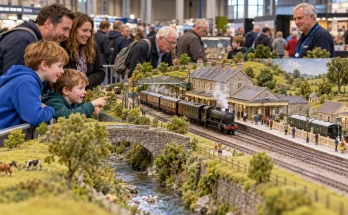
Ever walked into a model railway exhibition and found yourself completely absorbed by one particular layout?
Maybe it was the beautifully illuminated countryside, the realistic movement of locomotives, or the way every small detail seemed to tell a story. Whatever caught your attention, chances are the modeller understood something important: presentation matters just as much as craftsmanship.
Building an impressive miniature railway is one achievement. Presenting it professionally to hundreds of visitors is an entirely different challenge.
Exhibition presentation strategies for professional railway modellers go beyond attractive scenery and accurate rolling stock. They involve creating a memorable viewing experience through lighting, visual composition, storytelling, operational demonstrations, and thoughtful audience interaction.
And here’s the interesting part.
Even a relatively small layout can outperform a much larger display when its presentation is carefully organised.
Visitors don’t necessarily remember how many turnouts you installed or how expensive your locomotives were. They remember the atmosphere, the movement, and the experience of watching your railway come alive.
In this guide, we’ll explore practical techniques for transforming a well-built model railway into a polished exhibition attraction that captures attention and leaves a lasting impression.
1. Developing a Clear Exhibition Identity and Visual Story
Professional railway exhibitions are full of competing attractions.
Visitors might see dozens of layouts representing different periods, countries, railway companies, and modelling scales.
Your display needs a recognisable identity that helps people understand what makes it special.
Define the Central Theme
Begin by identifying the main story behind your railway.
Perhaps your layout represents a 1950s British countryside terminus, a busy industrial freight yard, or an atmospheric coastal railway during the steam-to-diesel transition.
Whatever the setting, the presentation should reinforce that identity.
A rural branch-line display might emphasise quiet landscapes, modest infrastructure, and occasional passenger services.
An industrial railway could focus on freight movements, weathered buildings, loading activities, and more intensive shunting.
The railway’s story should influence everything from lighting to operating schedules.
Rather than adding features simply because they look interesting, consider whether they contribute to the overall atmosphere.
Create a Memorable Focal Point
Every successful exhibition layout benefits from a clear visual focal point.
This could be a station platform, locomotive depot, dramatic viaduct, or detailed industrial complex.
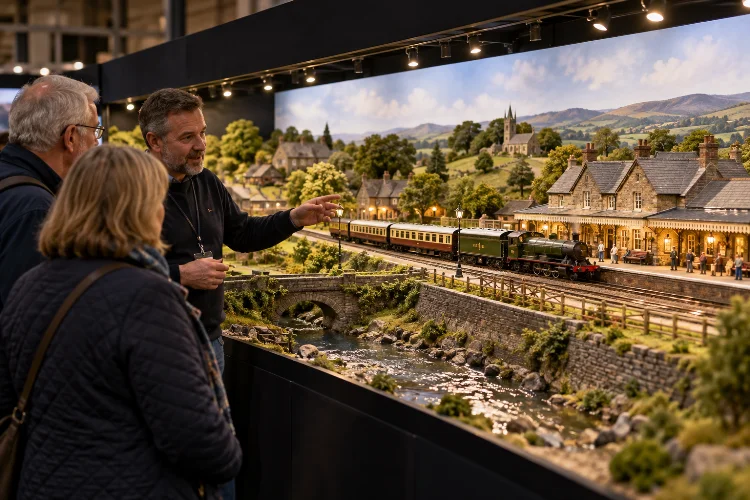
Imagine a compact OO gauge layout featuring a countryside station beneath a stone road bridge.
The bridge frames arriving trains, while the station building and nearby goods siding provide additional visual interest.
Visitors naturally focus on the train emerging beneath the bridge.
That moment becomes the layout’s signature scene.
You don’t need several equally dramatic features. One carefully designed focal point often creates a more memorable impression.
Maintain Historical and Scenic Consistency
Visual storytelling becomes less convincing when unrelated details appear together.
A steam-era railway shouldn’t casually include modern road vehicles or advertising from a completely different period.
Similarly, the surrounding scenery should reflect the geographical setting.
A Scottish Highland railway needs different vegetation, terrain, and architectural details from a railway in East Anglia.
Consistency gives visitors the feeling they’re observing a specific place rather than a random collection of miniature objects.
2. Using Theatrical Presentation to Control the Visitor’s View
Model railway presentation has more in common with theatre than many people realise.
In both situations, the audience observes a carefully constructed environment designed to create an illusion.
The modeller’s job is to guide attention toward the miniature railway while keeping unnecessary distractions out of sight.
Understanding the Proscenium Approach
A proscenium is a theatrical frame surrounding a stage.
The same principle can be applied to model railway exhibition layouts.
Carl Arendt’s article Theatrical Layout Design explains how framing, sightlines, and controlled viewing angles improve the illusion of a working railway.
A front fascia, backscene, side panels, and overhead lighting structure can turn an ordinary baseboard into a miniature theatre.
This is particularly effective for compact layouts.
By hiding the edges of the scene, the presentation suggests that the railway extends beyond its physical boundaries.
Using Backscenes to Create Depth
A good backscene provides more than an attractive sky.
It connects the miniature foreground with an imagined landscape beyond the railway.
For example, a countryside scene might feature distant hills, agricultural fields, and soft cloud formations.
The horizon should match the normal viewing angle.
If the photographic background has an unrealistic perspective, the scene may feel artificial even when individual models are beautifully constructed.
Pay attention to the transition between physical scenery and printed or painted backgrounds.
Trees, low-relief buildings, and landscape contours can help conceal that boundary.
Keep the Presentation Area Clean
Professional exhibitions demand a neat front-of-house appearance.
Visible wiring, loose tools, packaging, and personal belongings can distract from the railway.
Use fascia panels or carefully positioned curtains to conceal equipment beneath the layout.
Keep bags and spare rolling stock in designated storage areas.
Andy Leaning’s article Front of House for the Exhibition Layout demonstrates how framed presentation can strengthen the sense of realism.
The objective isn’t to hide how the railway works forever. It’s simply to ensure visitors see the intended miniature world rather than the equipment supporting it.
3. Mastering Exhibition Lighting for Maximum Visual Impact
Lighting can completely transform the appearance of a model railway.
Even exceptional scenery may look disappointing beneath harsh exhibition-hall lights.
Meanwhile, carefully controlled illumination can make a modest layout appear remarkably atmospheric.
Create Consistent Lighting Conditions
Exhibition venues often have unpredictable lighting.
Large windows, overhead fixtures, and nearby displays can produce reflections or uneven illumination.
An integrated lighting system gives modellers greater control.
World of Railways’ How to Optimise Your Layout Lighting explores how theatrical lighting principles can improve model railway presentation.
LED lighting is particularly practical because it offers compact installation, adjustable colour temperature in suitable systems, and relatively low heat output.
However, avoid positioning bare LEDs where visitors can see the individual bright points.
Diffusers help produce softer, more natural illumination.
Match Lighting to the Railway’s Atmosphere
The lighting should support the scene’s intended time of day.
A summer countryside railway might benefit from balanced daylight-style illumination.
An industrial layout representing an overcast afternoon could use softer, slightly cooler lighting.
For an evening station scene, controlled pools of warm light can highlight platforms, buildings, and locomotive details.
Avoid excessive colour effects unless they’re appropriate to the setting.
Bright blue, purple, or red illumination may look dramatic, but it can undermine the realism of an otherwise conventional British railway.
Use Light to Guide Attention
Lighting can direct visitors toward important scenes.
A slightly brighter station platform naturally attracts attention, while subdued background illumination helps create depth.
This technique is especially effective when combined with theatrical framing.
For example, a locomotive emerging from a dim cutting into a well-lit station can create a striking visual moment.
Test the lighting from normal visitor positions rather than only from the operator’s side.
Also photograph the layout under its own lights.
Camera images often reveal unwanted reflections and harsh shadows that aren’t immediately obvious during construction.
4. Designing Informative Signage and Exhibition Branding
Professional presentation isn’t only about the railway itself.
Visitors also need enough information to understand what they’re looking at.
Clear exhibition signage can turn a visually impressive layout into an educational and memorable experience.
Create a Professional Layout Nameplate
Start with a simple, attractive nameplate.
It should identify the railway and communicate its setting without overwhelming the scenery.
For example:
Ashford Quay — Southern England, 1958
A fictional coastal goods railway inspired by British Railways operations.
This immediately establishes the layout’s identity, location, and approximate historical period.
Use readable typography, consistent colours, and materials that complement the fascia.
Avoid excessively decorative fonts that become difficult to read from a distance.
Communicate Information in Layers
Different visitors want different levels of detail.
Some simply want to watch the trains, while others enjoy learning about historical operations and modelling techniques.
A useful presentation approach is to provide information in three layers.
The first layer is a short title and description visible immediately.
The second offers a concise explanation of the railway’s history, scale, and main features.
The third provides more detailed information through a printed guide, photo album, or optional QR code linking to a project page.
This approach keeps the display visually clean without limiting the information available to enthusiasts.
Highlight Technical and Creative Achievements
Professional modellers often use specialised construction methods worth sharing.
Perhaps the buildings are scratch-built, locomotives have custom sound installations, or the landscape uses advanced weathering techniques.
Consider displaying a small collection of construction photographs.
The National Model Railroad Association’s Magic of Scale Model Railroading exhibition demonstrates the educational value of showing how miniature railways are constructed.
Visitors may appreciate the finished railway even more after understanding the work behind it.
However, keep detailed technical displays seperate from the primary viewing area so they don’t block the actual layout.
5. Choreographing Train Movements for Audience Engagement
A railway exhibition layout isn’t a static sculpture.
Train movements are central to the experience.
Yet continuous movement doesn’t automatically make a display more entertaining.
The most convincing layouts combine realistic operations with a carefully considered presentation rhythm.
Develop an Operating Sequence
Think about your railway as a live performance.
A passenger train enters the station, pauses while passengers board, and eventually departs.
A freight locomotive might then arrive and perform a short shunting operation.
Later, another passenger service appears.
These movements create a natural sequence that visitors can follow.
For example, a fictional 15-minute demonstration might include a passenger arrival, a locomotive run-round movement, a goods train appearance, and a short freight-shunting sequence.
This is an illustrative exhibition programme rather than a historical timetable.
The appropriate frequency depends on your railway’s period, location, and operational purpose.
Create Moments Worth Watching
Not every movement needs to be dramatic.
A slow locomotive coupling to a wagon can be fascinating when viewers understand what’s happening.
Similarly, the careful movement of a goods train through a complex junction can demonstrate the railway’s operational logic.
Consider scheduling occasional highlights.
A special train could appear at selected intervals, or a detailed shunting sequence could demonstrate how a small rural goods yard functioned.
These moments create variety and provide opportunities for operators to explain the railway.
Avoid Excessive Movement
One common presentation mistake is trying to keep every locomotive moving constantly.
This can make operations feel unrealistic and visually confusing.
A quiet branch railway should behave differently from a major urban junction.
Short pauses can reinforce authenticity, particularly when operators explain what the trains are waiting for.
The goal is to maintain audience interest without sacrificing the railway’s believable character.
Ensure Smooth Performance
Operational interruptions can weaken even the most polished display.
Test locomotives, track connections, turnouts, and coupling systems before the exhibition.
Prepare alternative operating sequences if a particular locomotive or section becomes unavailable.
A professional team should be able to manage minor technical problems without creating unnecessary confusion in front of visitors.
6. Improving Visitor Accessibility and Public Interaction
Great presentation means making the railway enjoyable for as many people as possible.
Exhibition audiences include experienced enthusiasts, casual visitors, children, and people with different accessibility needs.
Designing for these groups can significantly improve the overall experience.
Consider Viewing Height and Sightlines
Higher layouts can provide realistic near-eye-level views.
However, they may be difficult for children or wheelchair users to see.
Lower displays can improve accessibility but may weaken the intended perspective.
The best solution depends on the layout’s scale, design, and venue.
Test different viewing positions before finalising the display height.
Where practical, provide alternative viewpoints or safe, organiser-approved viewing arrangements.
Avoid obstructing accessible circulation routes with protective barriers or supporting equipment.
Encourage Meaningful Conversations
Operators are part of the presentation.
Visitors often enjoy speaking with the people who built the railway.
A friendly explanation of how a signal works or why a locomotive performs a particular movement can make the display more engaging.
Not everyone understands railway terminology, so use simple language when speaking with general audiences.
Instead of beginning with complicated signalling rules, explain that the locomotive must wait until the track ahead is available.
Experienced enthusiasts can always ask more detailed questions.
Protect the Layout Without Creating Distance
Public interaction should never compromise safety.
Use suitable barriers, protective fascia extensions, or display screens where necessary.
Keep electrical cables away from visitor walkways and ensure that the supporting structure is stable.
Exhibition organisers and insurers may have specific conditions concerning supervision and barriers.
For example, the Central Model Railway Association’s published exhibition insurance documentation includes conditions regarding public separation or continuous supervision of working layouts.
These are examples of policy-specific requirements rather than universal regulations.
Always check the current conditions applying to your particular venue and event.
7. Organising a Professional Exhibition Operating Team
Behind every successful exhibition display is a reliable operating team.
Even a small model railway can become difficult to manage when operators must simultaneously control trains, answer questions, and handle technical problems.
Clear responsibilities make the experience easier for everyone.
Assign Defined Roles
For a medium-sized exhibition layout, responsibilities might include train operation, fiddle-yard management, visitor interaction, and technical support.
One person may handle several roles on a compact railway.
However, everyone should understand the operating procedures.
A simple written guide can describe the train sequence, turnout positions, emergency stop arrangements, and common troubleshooting steps.
This is especially useful when different club members operate the railway throughout the event.
Prepare an Exhibition Information Pack
Exhibition organisers often need more information than the scenic length of a layout.
They may require the complete footprint, operating space, electrical requirements, number of operators, and setup arrangements.
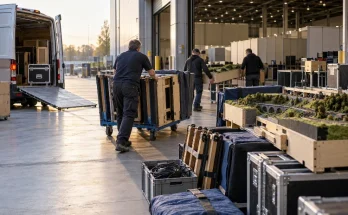
The World of Railways feature on Gordon Gravett’s Arun Quay illustrates the importance of portability, protected transport, and carefully organised presentation equipment.
Prepare a concise information pack containing the essential technical details and several professional photographs.
Include a track plan or footprint diagram where appropriate.
This helps organisers understand whether the display suits their available space.
Maintain Professional Standards Throughout the Day
Operators should be comfortable, organised, and able to take breaks.
Avoid leaving the layout unattended when supervision is required.
Keep food, drinks, tools, and personal belongings away from visible scenic areas.
Regularly inspect the presentation for dust, damaged details, or misplaced rolling stock.
Small improvements in maintenence and organisation can make a surprisingly large difference to how professional the display appears.
8. Using Photography, Promotion, and Feedback to Improve Presentation
A successful exhibition doesn’t necessarily end when the railway is packed away.
Photographs, visitor feedback, and professional relationships can help modellers secure future exhibition invitations.
They also provide valuable information about how well the layout communicates its story.
Prepare High-Quality Exhibition Photography
Photograph the railway before the event under controlled lighting conditions.
Capture the main focal point, overall layout, interesting train movements, and distinctive scenic details.
Use realistic viewing angles rather than relying entirely on overhead photographs.
Make sure the background doesn’t reveal distracting equipment or unfinished areas.
For promotional use, maintain consistent image quality and identify the layout clearly.
Exhibition organisers can then use these photographs in event programmes or promotional material, subject to appropriate permissions.
Build a Recognisable Modelling Portfolio
Professional railway modellers often benefit from maintaining a project website or online portfolio.
This doesn’t need to be complicated.
A collection of finished photographs, construction updates, layout specifications, and exhibition appearances can demonstrate your work effectively.
Share useful modelling insights rather than posting only promotional announcements.
Visitors who enjoyed the railway may appreciate learning how its buildings, landscapes, or control systems were created.
Evaluate the Visitor Experience
After each exhibition, review what worked and what could improve.
Pay attention to which scenes attracted visitors, which information prompted questions, and whether the operating sequence remained engaging.
Ask fellow exhibitors for constructive feedback.
You might discover that visitors couldn’t see an important shunting movement or that certain signs were difficult to read.
These observations are useful because the builder’s perspective can be very different from the audience’s.
Make Improvements Gradually
Professional presentation develops through experience.
You don’t need to redesign the entire railway after every event.
A revised lighting angle, clearer information panel, improved operating sequence, or better-positioned viewing area may produce noticeable improvements.
Keep a brief record of lessons learned.
Over time, these changes help create a more refined and consistant exhibition experience.
Exhibition presentation strategies for professional railway modellers are about turning detailed miniature railways into memorable public experiences.
Strong visual storytelling, theatrical framing, carefully controlled lighting, informative signage, and realistic operations all contribute to a polished display.
Equally important are visitor accessibility, professional operator behaviour, dependable equipment, and effective communication with exhibition organisers.
The most successful layouts don’t necessarily have the largest budgets or most complicated track arrangements. They create an atmosphere that draws visitors in and gives them a reason to keep watching.
By treating your railway as both a technical achievement and a carefully presented exhibition, you can showcase your modelling skills much more effectively.
Ready to elevate your next railway exhibition? Start by improving your layout’s visual presentation, refine its operating sequence, and focus on creating an experience visitors will genuinely remember.